Do You Need a Custom Night Guard or an Over-the-Counter Mouth Guard?

Night guards are used for a wide variety of reasons, from protecting teeth against teeth grinding (bruxism) to preventing snoring. If you suspect you need to wear a mouth guard at night, you might be wondering if you need to get a custom one made, or if an over-the-counter one will suffice.
In this guide, we’re exploring when you might need to wear a mouth guard, how they are made, and when you should choose custom over a generic design.
Key takeaway
- Mouth guards are most commonly used for bruxism treatment.
- They can also be used to help position the jaw to prevent snoring.
- You can visit your dentist to have a custom mouth guard made to your exact measurements.
- You can also buy “boil and bite” mouth guards over the counter that deliver similar results.
- The right one will depend on why you are wearing the mouth guard.

What is a mouth guard for?
Mouth guards are most commonly used to help treat bruxism. This is a condition where an individual grinds their teeth together at night while they are sleeping. It can lead to problems with the jaw, dental pain, damage to the teeth and enamel erosion.
Wearing a mouth guard at night will not stop the patient from grinding their teeth, but it can help to protect the teeth by absorbing the force of the bite. It will also prevent the top and bottom arches from grinding against each other, which can help to prevent enamel erosion.
A mouth guard can therefore be used during the treatment process, but it won’t address the underlying issue.
A mouth guard can also be used to help correct the position of the jaw when sleeping, which can help to prevent snoring.

Options for night guards or mouth guards
If you need a mouth guard for night time, you’ll have a choice between a custom apparatus made by your dentist, or an over-the-counter option.
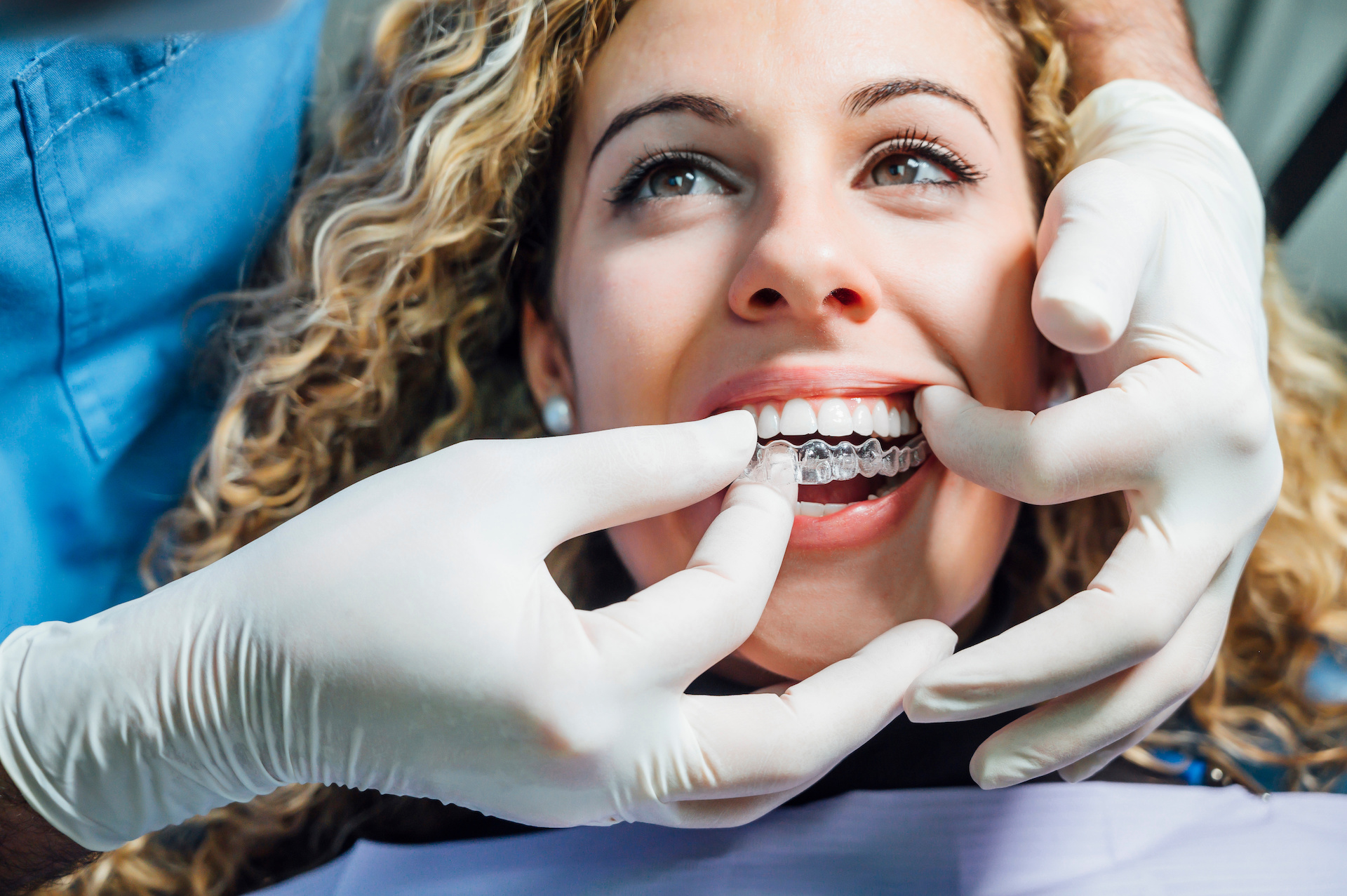
The custom version is created by your dentist after taking impressions of your teeth and how they fit together. This ensures a perfect and secure fit over your teeth, which can help to keep the mouth guard in place while you sleep.
Over the counter versions are sometimes known as boil and bite mouth guards. These are generic-sized mouth guards that you heat up in boiling water at home. You then put the heating mouth guard in your mouth and bite down. You keep this position until the plastic has cooled. This results in a semi-custom fit, although the overall size of the mouth guard will need to be bigger to ensure there is enough material for the moulding.

Which option is right for you?
Both can be effective for addressing sleep issues like bruxism or snoring, but there are differences that should be noted.
- A custom mouth guard designed by your dentist will be much more compact, which can make it easier to wear at night time. The material will be thinner around the front, and thicker where it is needed.
- Custom mouth guards can run into the hundreds of pounds and will need to be replaced periodically. This can make custom mouth guards much more expensive than over the counter mouth guards, which often cost around £30 to £50.
- If you have braces, you will need a custom mouth guard that is designed to fit over your braces.
- You’ll need a dentist referral for a custom mouth guard, but anyone can buy a boil-and-bite mouth guard if they think they could benefit from this treatment. Patients might buy one as a low-risk trial before they commit to a custom model.
- If you struggle to wear an over-the-counter mouth guard because of the size, then you might need a custom variation to help prevent discomfort.
- If you have occasional teeth grinding problems and you are happy to manage the condition yourself, then an over-the-counter mouth guard is a low cost treatment option to consider.
- If you need a long-term solution, then a custom night guard will be better, as long-term use of a poorly-fitted night guard could lead to alignment issues.

How to care for your mouth guard at home
It doesn’t matter if you choose a custom mouth guard or an over the counter mouth guard; you’re going to need to keep it clean to prevent bacteria growth and bad smells.
You should rinse your night guard as soon as you take it out in the morning to get rid of any saliva or debris. You can then use a dedicated cleaner, mild dish soap, or Castile soap to wash the night guard. Rinse it thoroughly and then leave it to air dry, then place it into a case to protect it. You should also soak the night guard at least once a week in a specialist retainer cleanser.
Need advice on a night guard? Find your nearest Damira Dental practice and speak to our team about your options.
Talk to our team about how we can improve your smile today.
Related news


Sign up for special offers
Sign Up